How to Choose a Conveyor Belt Cleaner: Primary, Return & Brush Explained
A belt cleaner is the cheapest insurance your conveyor has. The right cleaner removes carryback, protects the belt and idlers, and saves hours of cleanup — the wrong one wears out fast or damages the belt. This guide walks through the three cleaner types, how to match them to your belt, and the blade materials that actually last.
Why belt cleaning matters more than you think
Carryback — the material that sticks to the belt after the discharge point — is not just lost product. It builds up on return idlers, causes belt mistracking, wears the belt surface, and forces crews to spend hours on cleanup. A well-designed cleaning system removes 90% or more of carryback and pays for itself within weeks.
The three cleaner types and where each goes
Primary (head) belt cleaner
Mounted at the head pulley, right where the belt leaves the discharge point. It handles the bulk of carryback — typically 60–80% of the material — and does the heavy scraping. This is the first and most important cleaner on the belt.
Return (secondary) belt cleaner
Installed on the return strand, usually just before the tail pulley. It catches the fine, sticky material the primary cleaner leaves behind, keeping return idlers clean and the belt tracking straight.
Brush cleaner
A motor-driven or belt-driven rotating brush used where material is wet, sticky or very fine — the stuff static blades cannot remove. Many plants run a blade as primary and a brush as the final stage.
Blade material: what actually lasts
Three materials dominate the market. Choose by your application:
| Material | Best for | Trade-off |
|---|---|---|
| Polyurethane | Most abrasive, dry applications; gentle on the belt | Not for very hot material or sharp metal |
| Polyurethane + tungsten-carbide tip | Heavy impact and abrasive feed; longest service life | Slightly higher cost |
| Rubber / elastomer | Wet, sticky fines; low-cost options | Shorter wear life under heavy abrasion |
For mining and quarry duty we recommend polyurethane blades with tungsten-carbide tips: they combine scraping efficiency with long wear life and stay gentle on the belt surface.
How to match a cleaner to your belt
- Belt width: cleaners are made to belt width or wider. Tell us your belt width — Minpart covers 500 mm to 2400 mm.
- Mounting space: primary cleaners need access at the head pulley; secondaries can mount under the pulley or along the return strand.
- Material characteristics: wet and sticky material may need a brush final stage; abrasive rock needs carbide-tipped blades.
- Tensioning: spring constant-force designs self-adjust as blades wear, so the blade keeps contact without constant re-tightening.
Installation and maintenance tips
- Install the primary cleaner at an angle that matches the belt direction at the head pulley — usually 15–20° from the tangent.
- Leave the blade tensioned with constant-force springs; check blade wear every few months and replace before the metal backing contacts the belt.
- On steep or fast belts, add a hold-down roller for secondary cleaners to keep the blade engaged.
- Keep a spare blade set in stock — blade replacement takes minutes, not a full shutdown.
Minpart belt cleaners
Minpart is an OEM factory for primary cleaners, return cleaners and brush cleaners. Every cleaner is made to your belt width, with the blade material matched to your material. Send us your belt width and application, and we will quote a complete cleaning system — usually within 24 hours.
Frequently Asked Questions
How many belt cleaners do I need?
Most plants run one primary cleaner at the head pulley plus one or two secondary cleaners on the return strand. Wet or sticky material often adds a brush cleaner as the final stage.
How often should I replace cleaner blades?
Depends on material abrasiveness. With constant-force tensioning, inspect every 3–6 months and replace when the blade has worn to about half its original height or before the steel backing touches the belt.
Can a belt cleaner fix mistracking?
Not directly — mistracking is usually caused by loading imbalance, splice issues or idler misalignment. But a return cleaner prevents material buildup on return idlers, which is one of the most common causes of tracking drift.
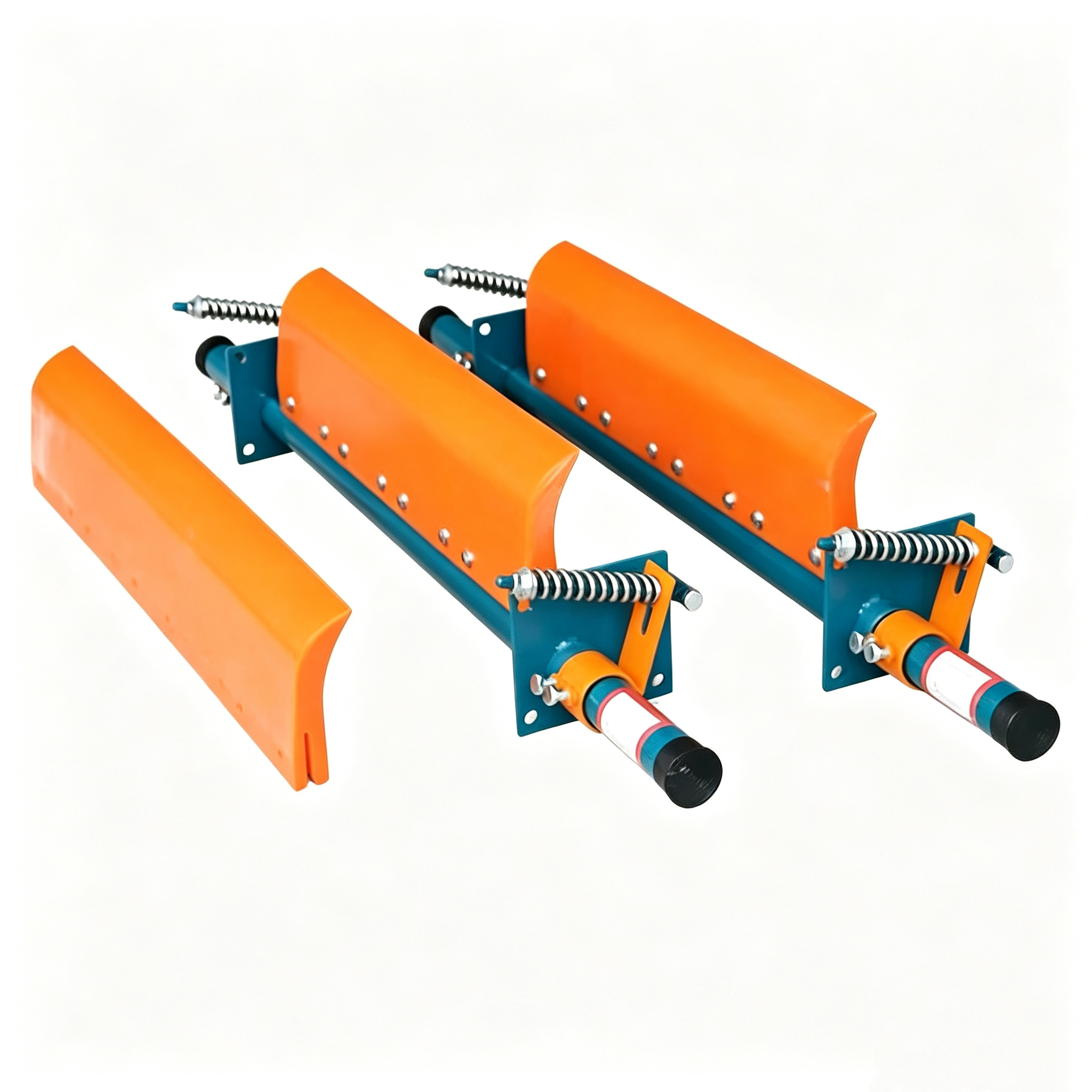 Primary Belt Cleaners
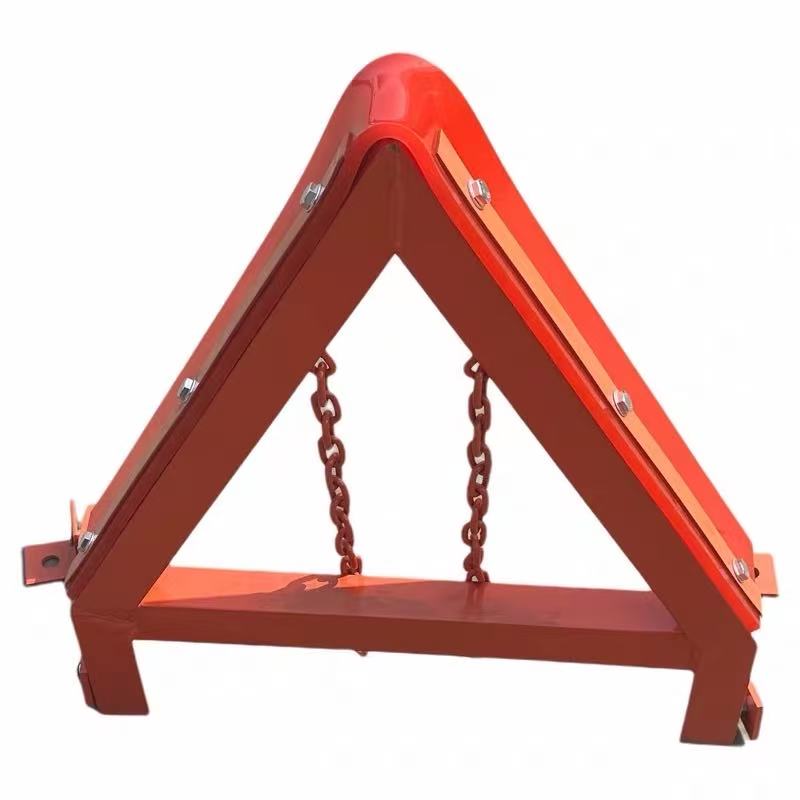 Return Belt Cleaners
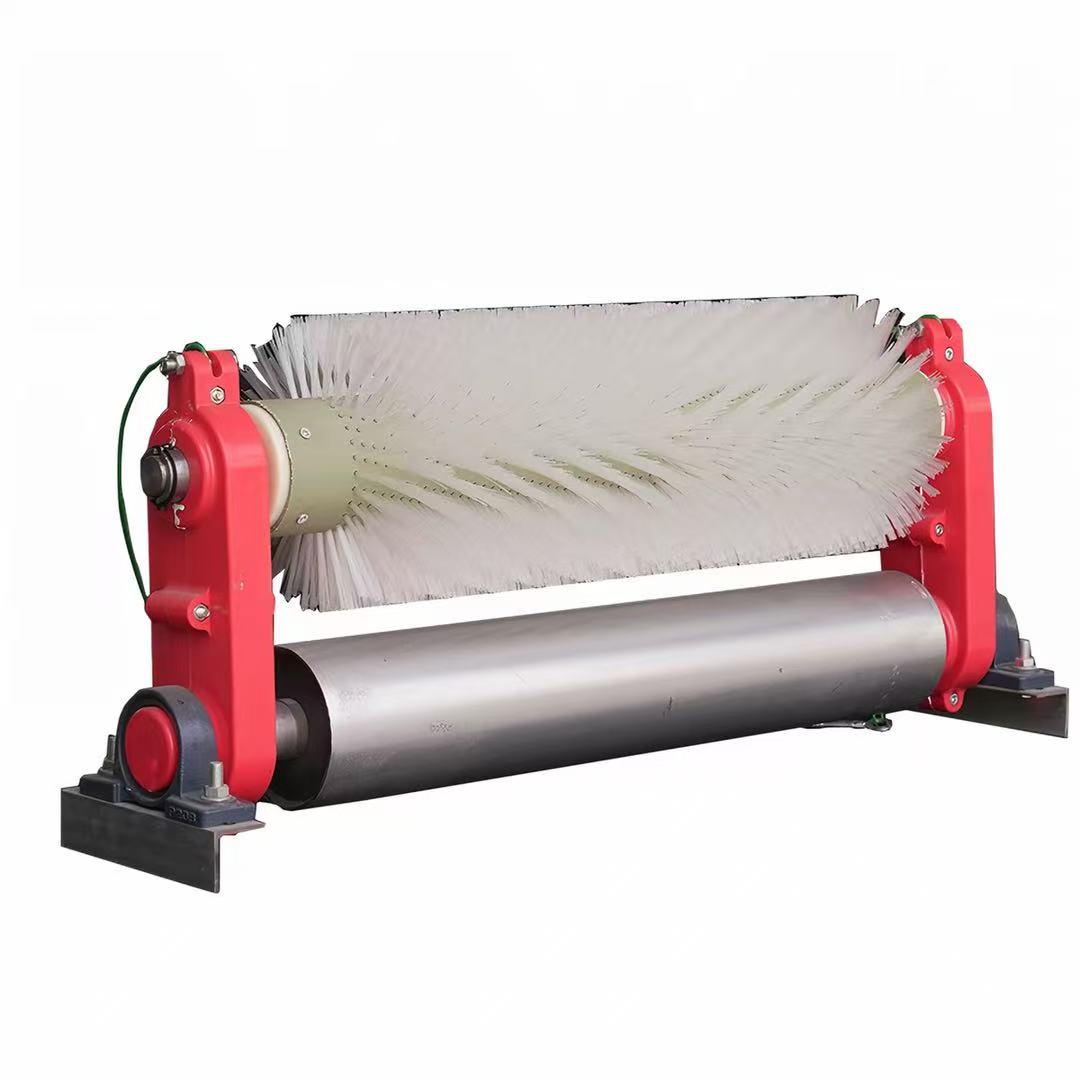 Rotary Brush Cleaners